
Why Fewer Words Move Learners Faster
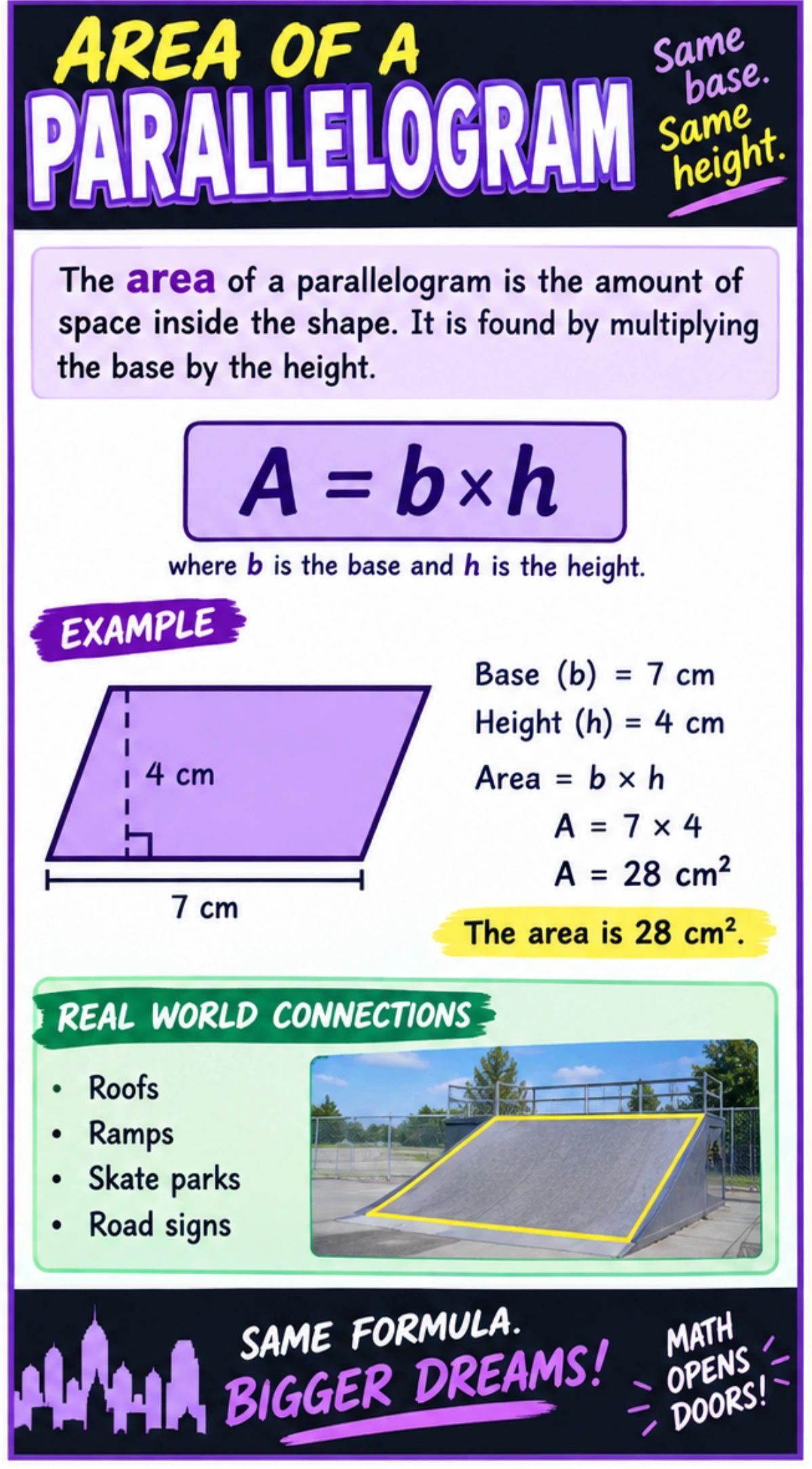
Every word on a page uses up some of a learner's working memory. We call workbook-style pages, with long and repeated explanations, visuo-cognitively effective: they can work, but slowly. E3's ELA + Math one-pagers are built to be visuo-cognitively empowering: short, precise language, labeled visuals, and one idea at a time, so students spend their attention on the math instead of on decoding the page. Our sheets are drafted with the help of Anthropic's Claude and edited by our Director for plain, precise language.
Cognitive Load
Working memory is limited. Extra words and repeated explanations add load that competes with learning (Sweller, 1988; Mayer & Fiorella, 2014).
Expertise Reversal
Heavy step-by-step guidance helps beginners, but the same guidance slows down more advanced learners, who learn faster from lean materials and practice (Kalyuga et al., 2003).
Language Load
Changing only the wording of math problems, while keeping the math the same, raises scores, especially for English learners and weaker readers (Abedi & Lord, 2001).
The Right Text for the Right Learner
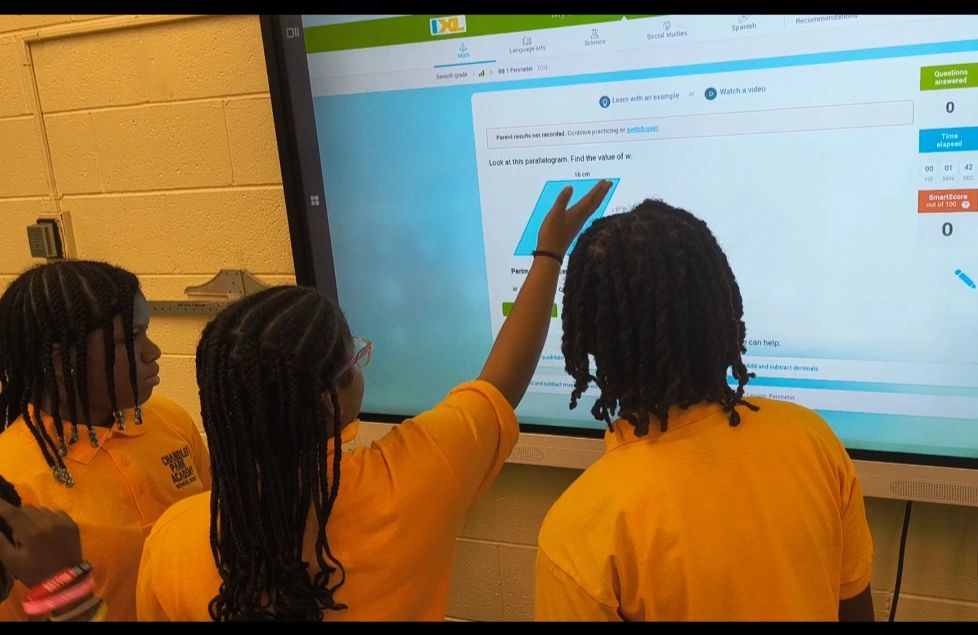
The research points to a match between learner and text. For small groups of students who need more reading support, a slower, more repetitive workbook can be the right tool, and E3 uses its Engage board for exactly that kind of teacher-led support.
For students who are ready to move faster, a single ELA + Math page gives them the vocabulary and a worked model, then sends them straight into problem sets. In our classroom pilot, one sheet covered the content of about 12 i-Ready workbook pages, and two sheets prepared students to complete three i-Ready lessons.
Read the research: Sweller (1988). Kalyuga et al. (2003). Abedi & Lord (2001). Mayer & Fiorella (2014).
The Visuo-Cognitive Imagination Model
In E3 classrooms, students close their eyes and picture a shape, a transformation or a procedure before they draw it. Then they build it on graph paper with a ruler, measuring and counting the units. The path runs from a mental image, to a precise drawing, to the symbols. Research shows imagining works best after students have seen a first worked example.
Eyes-Closed Imagining
Imagining a worked procedure beats re-reading it once students know the basics (Cooper et al., 2001). Closing the eyes cuts distraction and sharpens the mental image (Vredeveldt et al., 2011).
Graph Paper and Rulers
Many students don't see the rows and columns inside a grid on their own (Battista et al., 1998). Graph paper and ruler work makes that structure visible, the base for area, arrays and coordinates.
Spatial Training
Visuospatial training raised grade 6 students' spatial reasoning and math achievement (Lowrie et al., 2017). Across 217 studies, spatial skills improved with training, and the gains lasted (Uttal et al., 2013).